Call us +234 706 612 0046


Grid-Tied vs. Off-Grid Solar Systems: Which Is Right for You?

If your main question is, “Will I still have light when NEPA takes it?”, the type of solar system matters. Panels on the roof do not automatically mean backup power. Here is what grid-tied, off-grid and hybrid mean for your home or business.
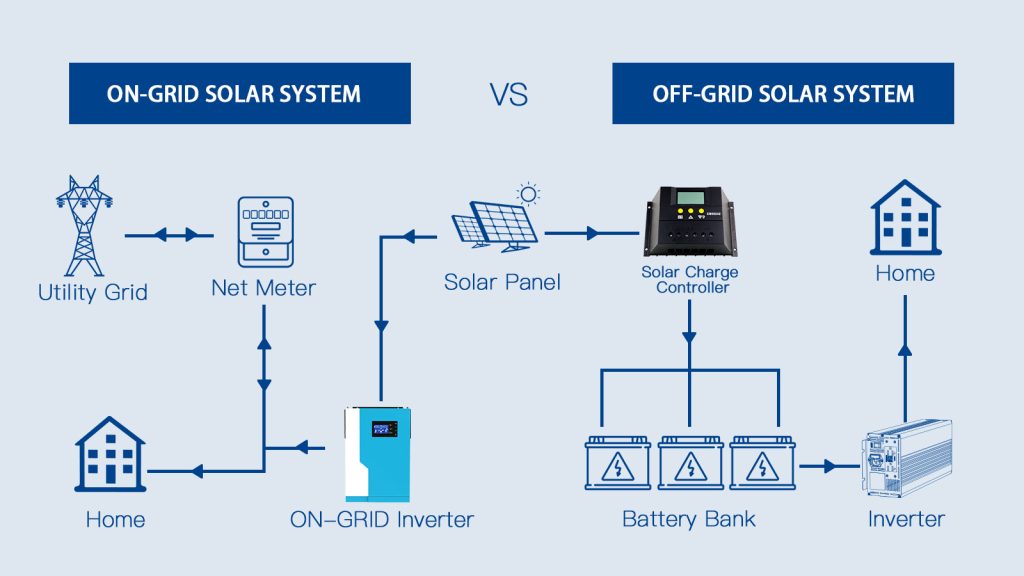
Three different arrangements: Grid-tied solar works alongside utility power. Off-grid systems operate independently of the utility. Hybrid systems can combine solar, batteries and grid or generator support, depending on the inverter and installation.
Grid-tied: Useful for supplying daytime loads while the grid is available. A conventional grid-tied inverter shuts down during an outage; backup needs equipment designed for isolated operation. See the US Department of Energy inverter guide.
Off-grid: Suitable where there is no usable utility supply. Panels and storage must be sized for daily consumption and periods of poor sunshine. A generator may still be needed for extended cloudy weather or unusually high demand.
Hybrid: Can keep selected circuits running during outages when installed with suitable storage and backup capability. Confirm which appliances are on the backup output, the power limit and the expected runtime. The word “hybrid” alone does not guarantee whole-house backup.
Think about your daily routine. A shop that closes in the evening has different needs from a home running fans, a freezer and an AC overnight. Tell your installer when you use each appliance and how often grid power is available.
Compare complete quotations. Include panels, usable battery capacity, protection, installation and after-sales support. Do not assume you can export surplus power or receive payment for it; confirm the applicable arrangement with your electricity provider before including export income in your savings estimate.
Choose around your priority. Is it lower daytime electricity use, overnight backup, or power at a site without grid supply? Illamab can assess your appliances, location and budget, then explain the options and limitations before you commit.